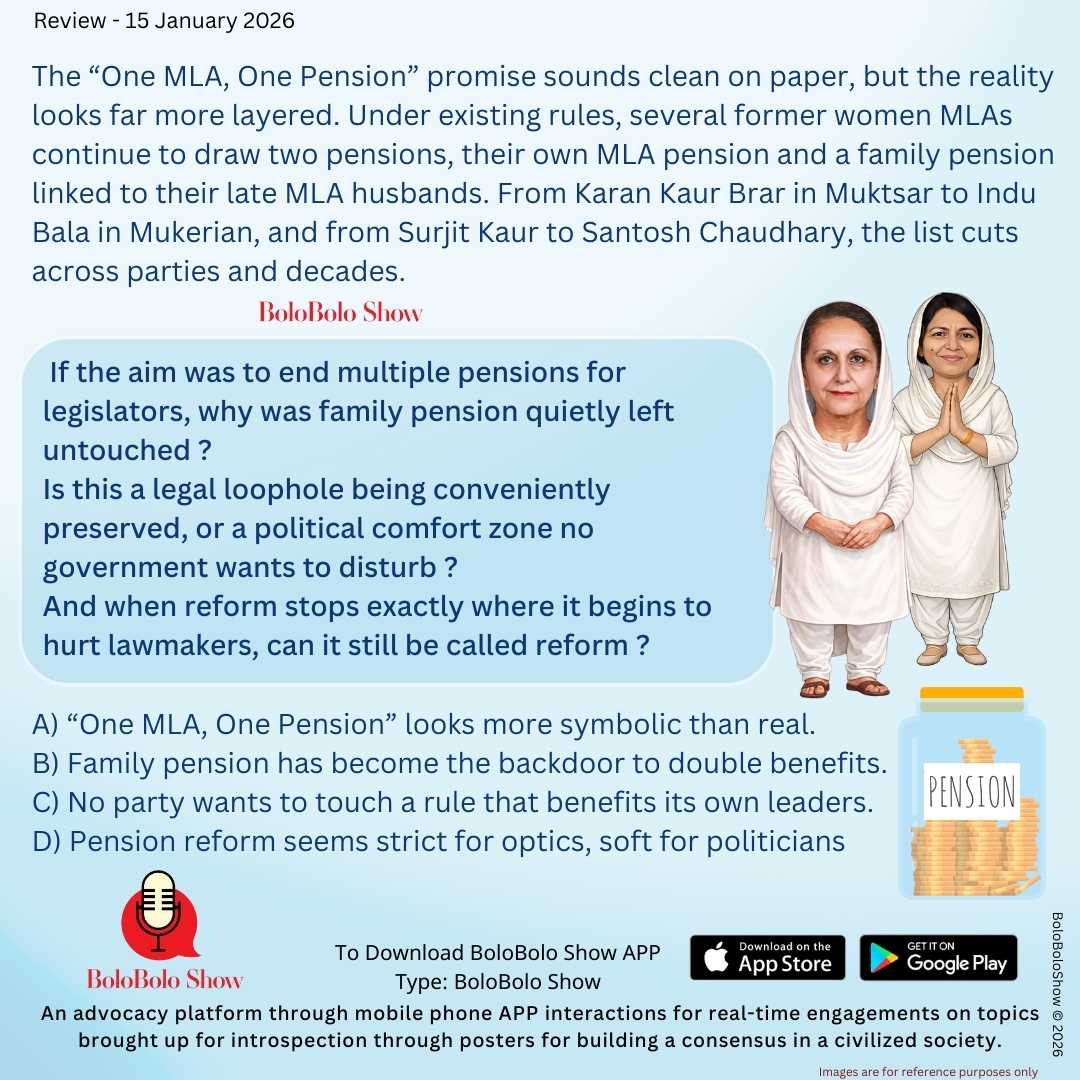
The “One MLA, One Pension” promise sounds clean on paper, but the reality looks far more layered. Under existing rules, several former women MLAs continue to draw two pensions, their own MLA pension and a family pension linked to their late MLA husbands. From Karan Kaur Brar in Muktsar to Indu Bala in Mukerian, and from Surjit Kaur to Santosh Chaudhary, the list cuts across parties and decades. If the aim was to end multiple pensions for legislators, why was family pension quietly left untouched ? Is this a legal loophole being conveniently preserved, or a political comfort zone no government wants to disturb ? And when reform stops exactly where it begins to hurt lawmakers, can it still be called reform ?
Review - DEKHO
A) “One MLA, One Pension” looks more symbolic than real.
B) Family pension has become the backdoor to double benefits.
C) No party wants to touch a rule that benefits its own leaders.
D) Pension reform seems strict for optics, soft for politicians
Punjab Chief Minister Bhagwant Mann shared an anecdote about a college-time “fling” during a public speech, Akali MLA Ganieve Kaur Majithia strongly criticised the remarks, calling them unbecoming of someone holding the state’s highest constitutional office. Critics say the tone sounded more like a “Casanova-style story” than a Chief Minister’s address, especially troubling when such remarks are made in front of young audiences and women.
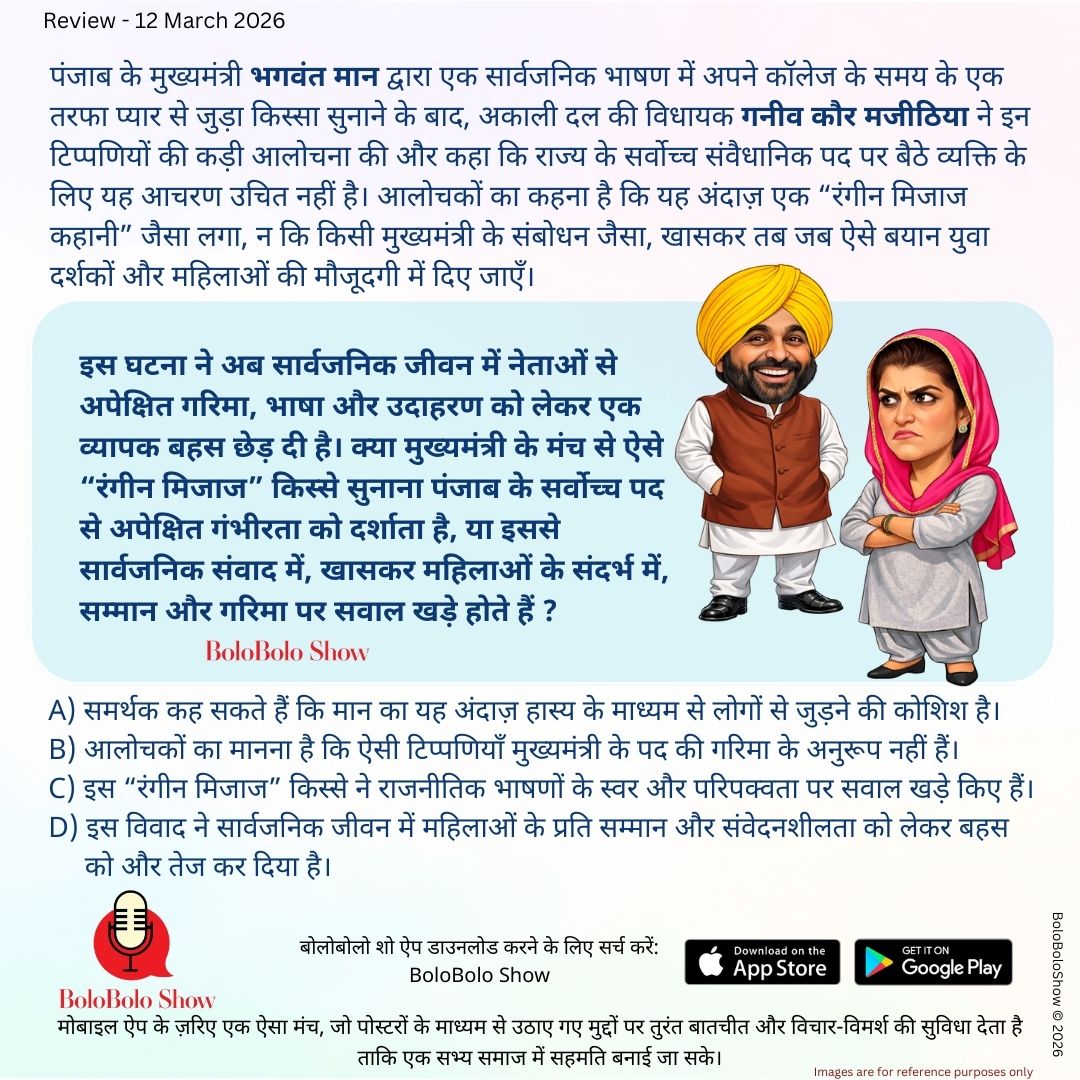
पंजाब के मुख्यमंत्री भगवंत मान द्वारा एक सार्वजनिक भाषण में अपने कॉलेज के समय के एक तरफा प्यार से जुड़ा किस्सा सुनाने के बाद, अकाली दल की विधायक गनीव कौर मजीठिया ने इन टिप्पणियों की कड़ी आलोचना की और कहा कि राज्य के सर्वोच्च संवैधानिक पद पर बैठे व्यक्ति के लिए यह आचरण उचित नहीं है। आलोचकों का कहना है कि यह अंदाज़ एक “रंगीन मिजाज कहानी” जैसा लगा, न कि किसी मुख्यमंत्री के संबोधन जैसा, खासकर तब जब ऐसे बयान युवा दर्शकों और महिलाओं की मौजूदगी में दिए जाएँ।
Mohali MLA Kulwant Singh has publicly questioning his own government over the lack of a solid waste management site has exposed unusual cracks within the ruling setup, especially when the criticism is directed at ministers of the same party.